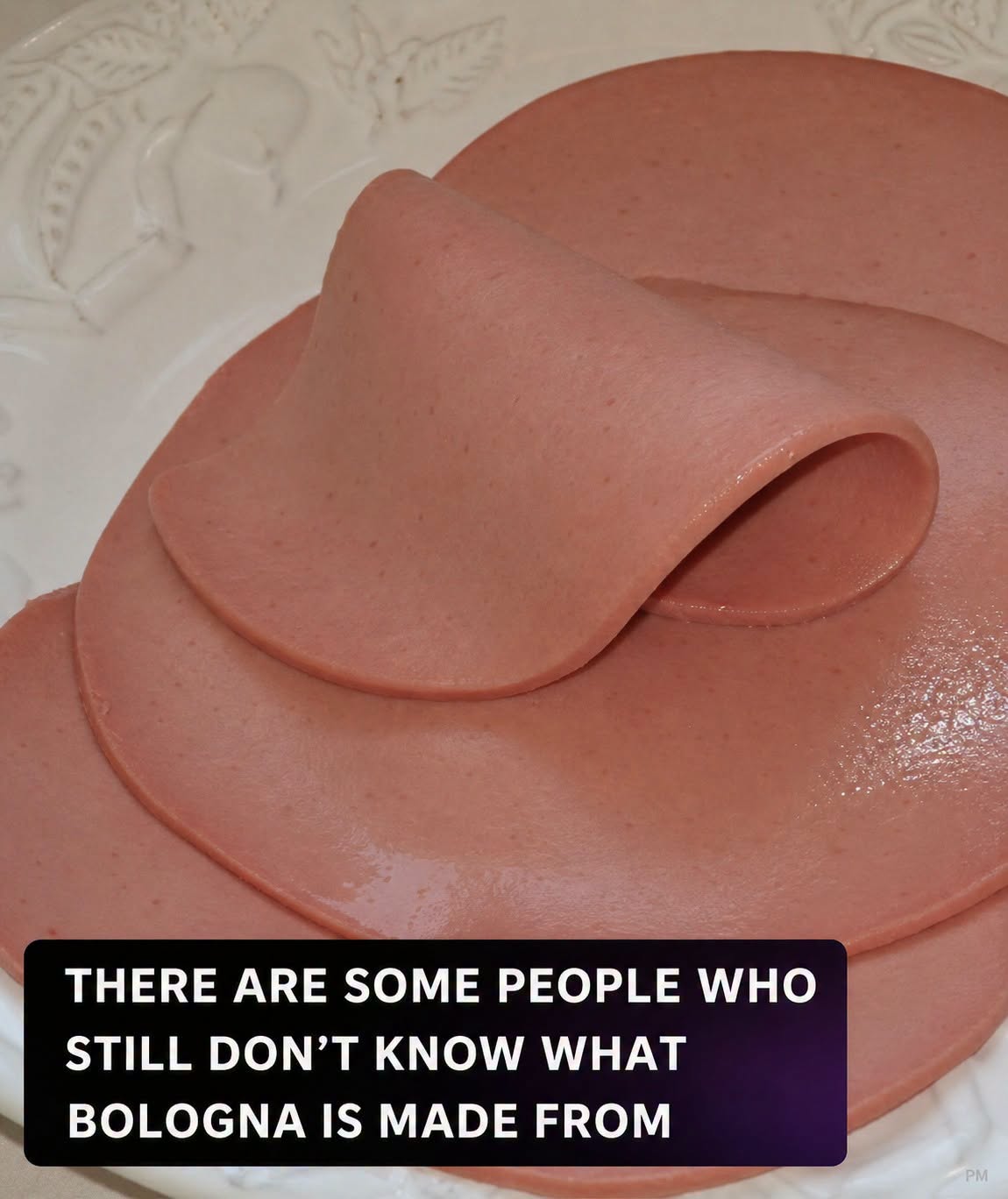
After mixing, the emulsion is placed into a casing and cooked. Some versions are smoked, while others rely mainly on seasoning and heat for flavor. Cooking sets the texture, makes the product safe to eat, and produces the firm cylinder that can be cut into thin, flexible slices.
The mild flavor is intentional. Bologna became popular partly because it appealed to children, worked in simple sandwiches, and cost less than many whole cuts of meat. It could be stored in the refrigerator, packed in lunches, fried in a pan, or eaten cold with bread, mustard, cheese, and other inexpensive ingredients.
Stories about unidentified scraps have followed the product for decades. Regulations do not allow a manufacturer to hide the species used. A package labeled beef bologna must be made from beef, while a product using several meats must identify them. Organ meats or byproducts are subject to separate labeling requirements rather than being silently added under the word bologna.
That does not make bologna nutritionally identical to fresh meat. It is a processed food and can contain significant amounts of sodium and saturated fat. Some varieties use curing agents such as nitrite. Anyone monitoring salt, fat, or particular additives can compare nutrition panels and ingredient lists, because products differ considerably.
Modern shelves include all-beef, pork-and-beef, chicken, turkey, reduced-sodium, and uncured-style versions. There are also regional products with stronger seasoning or different textures. The name describes a broad family of cooked sausages rather than one secret universal formula.