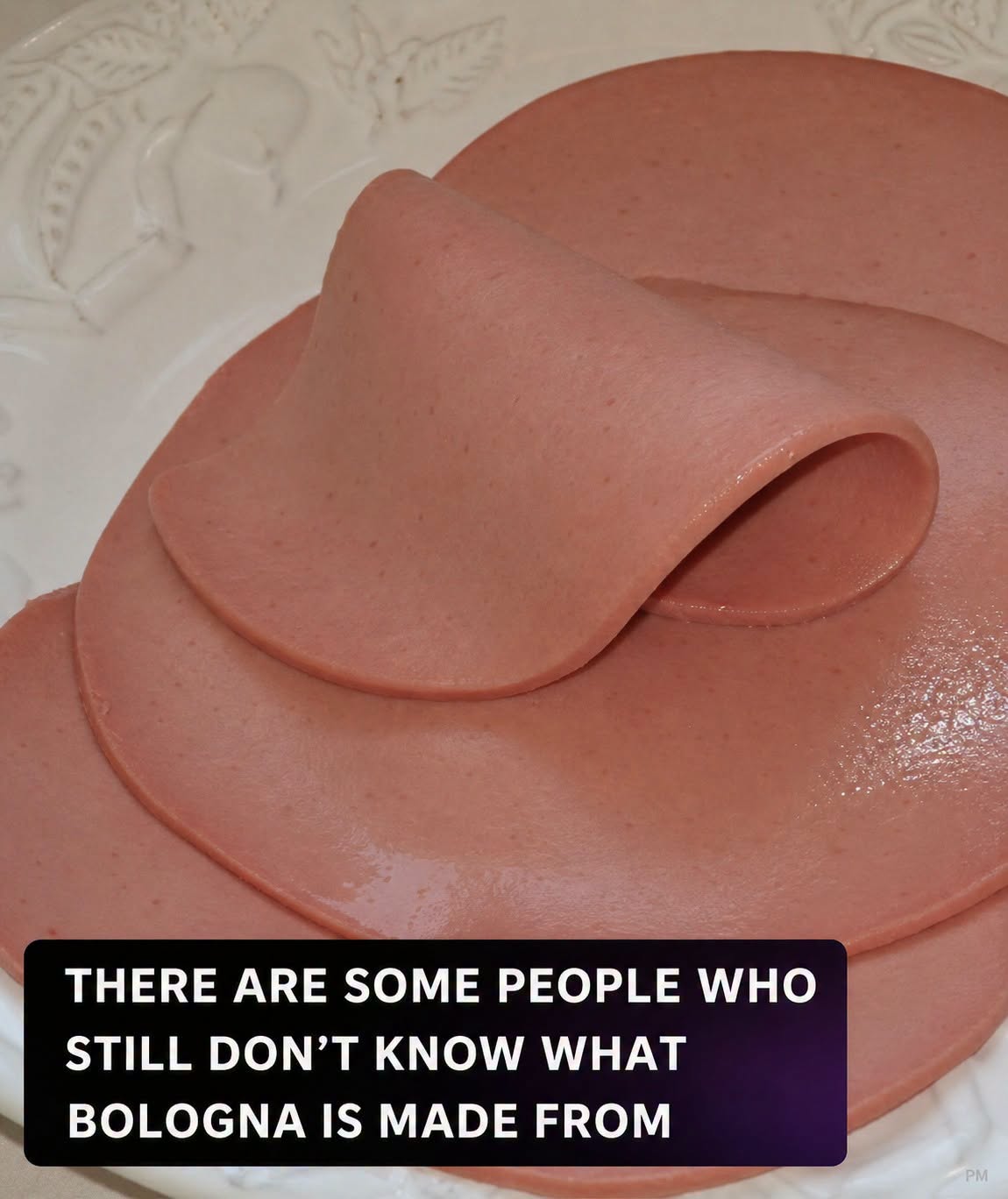
Bologna is often dismissed as “mystery meat,” but the familiar pink slices are produced through a deliberate and regulated process. The sausage developed from an older Italian tradition and was reshaped by industrial food production into an inexpensive, mild, and convenient lunch meat.
Its name points to Bologna, Italy, and to mortadella, the city’s famous sausage. Traditional mortadella has a coarser appearance than American bologna. Visible cubes of fat may be distributed through the meat, and recipes can include spices or pistachios. American manufacturers adapted that idea for large-scale production, creating the smooth texture and even color recognized in supermarkets.
The meat in bologna can be beef, pork, chicken, turkey, or a combination. The precise ingredients depend on the product and must be listed on the package. The selected meat and fat are ground extremely finely. Water, salt, seasonings, and curing ingredients are then blended in until the mixture forms an emulsion, a uniform paste in which the components remain evenly distributed.
That emulsifying step explains why a slice of bologna does not show separate pieces of muscle and fat. The ingredients have been reduced and mixed so thoroughly that the finished sausage looks consistent from edge to edge. The process is similar in principle to the one used for other smooth sausages, although recipes and seasonings vary.