Genetics
Existing medical conditions
Think of loquats as one small piece of the bigger picture.
Loquats can be a useful snack for people who want to eat more whole fruits.
They contain water and fiber and can satisfy a desire for something sweet without being a highly processed dessert.
Instead of reaching for candy, cookies, or sugary drinks, a serving of fresh fruit can be a more nutrient-dense choice.
But it’s important not to believe claims that loquats “burn fat.”
No single fruit can specifically melt belly fat.
Weight management comes down to overall energy balance, eating patterns, physical activity, sleep, and other individual factors.
People with diabetes don’t necessarily need to avoid loquats.
Like other fruits, loquats contain naturally occurring carbohydrates and sugars.
However, they also provide fiber and water.
For someone managing blood glucose, the important factors include portion size, total carbohydrate intake, and what the fruit is eaten with.
Whole fruit is generally preferable to sweetened loquat juice or desserts made with large amounts of added sugar.
If you monitor your blood glucose, your own response can also provide useful information when incorporated into your usual meal plan.
Loquat leaves are traditionally used in some cultures to make tea.
You may also see loquat leaf products marketed online for various health purposes.
This is where it’s important to separate traditional use from proven medical treatment.
Research has investigated compounds found in loquat leaves, but that does not mean drinking loquat leaf tea can cure diabetes, cancer, infections, or other serious diseases.
The fruit and the leaves are not interchangeable.
If you’re taking medication or considering concentrated loquat leaf extracts or supplements, it’s sensible to discuss them with a healthcare professional.
For most people, yes.
The skin of a properly washed loquat is edible.
Some people prefer to remove it because they don’t like the texture, while others eat the fruit whole after removing the seeds.
If you eat the skin, wash the fruit thoroughly under running water.
There’s no need to use soap or household cleaning products on fruit.
If the skin is damaged, moldy, or visibly spoiled, discard the fruit rather than simply ignoring the affected area.
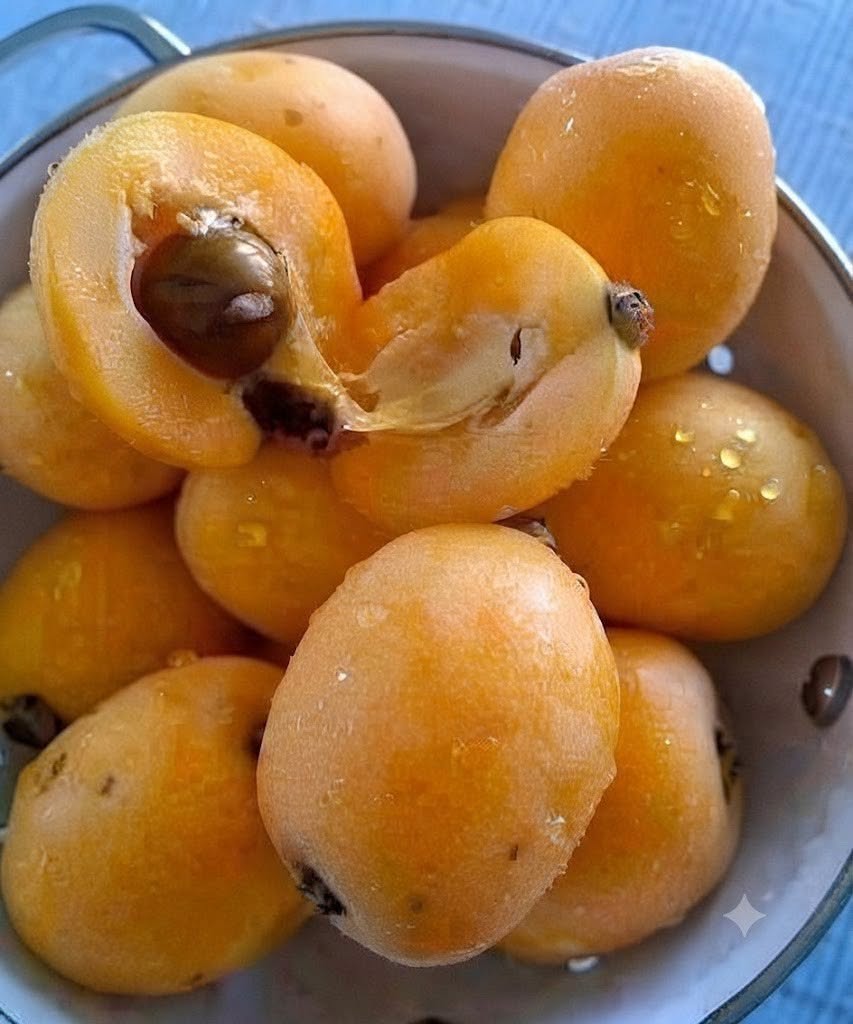
This is probably the most important thing to remember when eating loquats.
Don’t eat the seeds.
Loquat seeds contain cyanogenic glycosides, which can potentially release cyanide when broken down.
The amount present and the actual risk from accidental exposure can vary, but there is no reason to intentionally consume the seeds.
Don’t chew them.
Don’t grind them into smoothies.
Don’t use them as a food ingredient.
Simply remove and discard them.
The edible fruit itself is the part you want.
Fresh loquats are probably the simplest way to enjoy the fruit.
But loquats can also be used to make:
Jams
Jellies
Syrups
Desserts
Sauces
Pies
Preserves
Fruit drinks
The nutritional profile can change significantly once sugar is added.
For example, fresh loquat is very different from a loquat jam containing a substantial amount of added sugar.
If you’re trying to maximize the nutritional value of the fruit, fresh or minimally processed loquat is generally the simplest choice.
Choosing the right fruit can make a huge difference.
A ripe loquat should generally have a pleasant fruity aroma and feel slightly soft when gently pressed.
Depending on the variety, ripe fruit may have a golden-yellow to orange color.
Avoid fruit with:
Extensive bruising
Mold
Significant discoloration