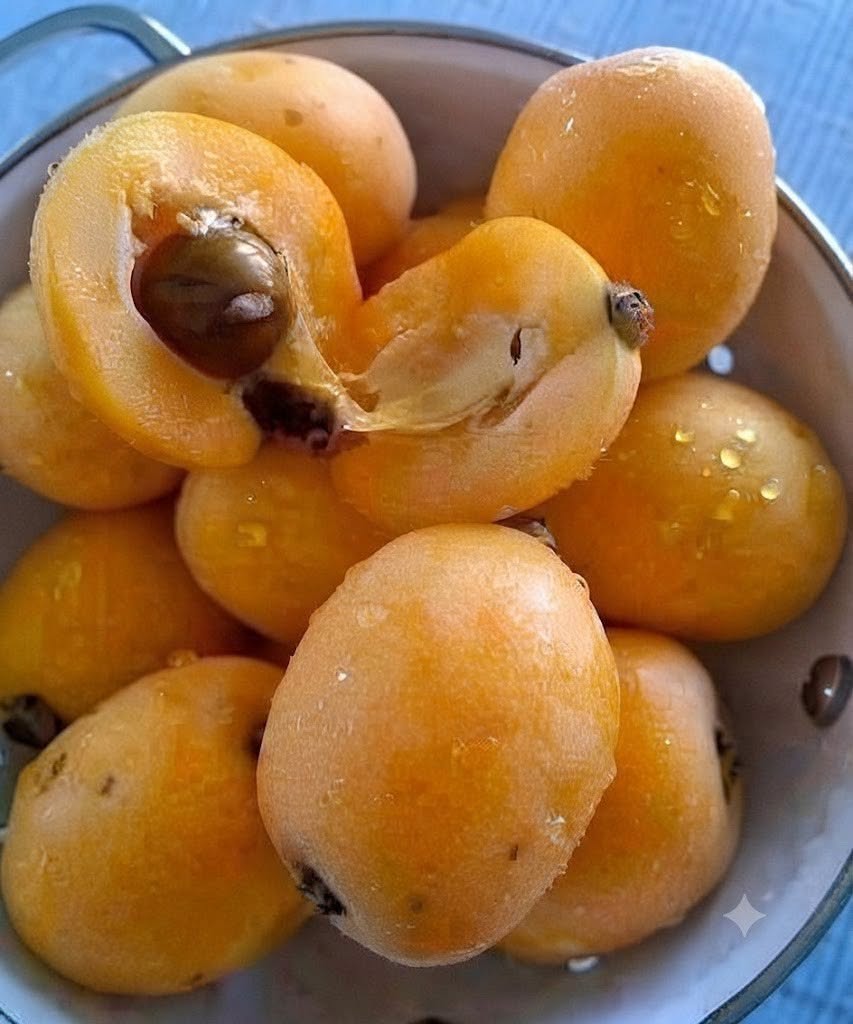
This is particularly important because loquat seeds contain cyanogenic compounds, which can release cyanide when the seeds are crushed or metabolized.
That doesn’t mean you need to be afraid of the fruit itself.
The edible flesh is the part normally consumed.
Simply discard the seeds rather than chewing or grinding them.
One of the first things people notice about loquats is how large the seeds are compared with the fruit.
Instead of having tiny seeds like many berries, a loquat can contain several relatively large, smooth, brown seeds.
Depending on the variety, you may find anywhere from one to several seeds.
This means that a portion of the fruit’s interior is occupied by seeds rather than edible flesh.
Some cultivated varieties have been developed to produce fewer or smaller seeds, making them more convenient to eat.
Still, the large seeds are one of the easiest ways to recognize a loquat once you’ve opened one.
Yes.
Like many fruits, loquats can be part of a balanced diet.
They provide water, natural carbohydrates, dietary fiber, vitamin A-related carotenoids, vitamin C, potassium, and various plant compounds.
The exact nutritional composition varies depending on the variety, ripeness, and serving size.
Rather than thinking of loquats as a “superfood,” it’s more useful to view them as one nutritious option among many different fruits.
Eating a variety of fruits gives your body access to a broader range of vitamins, minerals, fiber, and plant compounds.
One benefit of eating whole loquats is their fiber content.
Dietary fiber plays an important role in digestive health and can help support regular bowel movements.
Fiber can also contribute to feelings of fullness and support a healthy gut environment.
However, loquats shouldn’t be viewed as a cure for constipation.
If your diet is low in fiber, gradually increasing your intake of fruits, vegetables, legumes, and whole grains is generally more useful than relying on one particular fruit.
And when increasing fiber, adequate fluid intake is important as well.
Loquats also provide vitamin C.
Vitamin C is an essential nutrient that contributes to:
Normal immune function
Collagen production
Wound healing
Iron absorption
Protection of cells from oxidative stress
The amount of vitamin C in a serving of loquat isn’t enough to replace all other sources of the vitamin, but it contributes to your overall daily intake.
Eating a mixture of fruits and vegetables is the easiest way to obtain a wide range of nutrients.
The beautiful golden-orange color of ripe loquat flesh isn’t just attractive.
It comes partly from naturally occurring pigments called carotenoids.
Some carotenoids can be converted by the body into vitamin A.
Vitamin A is important for normal:
Vision
Immune function
Skin health
Cell growth
The amount of carotenoids varies considerably among loquat varieties, with some orange-fleshed cultivars containing more than others.
This is another reason that eating a variety of colorful fruits and vegetables can be beneficial.
Loquats can fit comfortably into a heart-conscious diet.
They provide fiber and potassium while being naturally low in fat.
Potassium is an essential mineral involved in fluid balance, nerve function, and muscle contraction, and adequate potassium intake is generally associated with healthy blood pressure regulation.
However, eating loquats alone cannot prevent heart disease.
Cardiovascular health depends on many factors, including:
Overall diet
Physical activity
Blood pressure
Cholesterol
Smoking
Sleep
Body weight