Fermented or unpleasant odors
Very soft, leaking areas
An underripe loquat can be firmer and more acidic.
A ripe one is usually much sweeter and juicier.
Despite their delicious flavor, loquats aren’t as widely recognized in some countries as apples, oranges, peaches, or bananas.
There are several reasons.
First, loquats have a relatively short season in many regions.
Second, the large seeds make them less convenient than some other fruits.
Third, they’re often more common in specific geographic areas and may not be widely available in ordinary supermarkets.
But if you encounter them at a farmers’ market or specialty grocery store, they’re worth trying.
No.
This is a common confusion.
Loquats and apricots may look similar because both can have yellow-orange skin and soft orange flesh.
But they belong to different species.
Loquat: Eriobotrya japonica
Apricot: Prunus armeniaca
They also grow under different seasonal conditions and have different textures and flavors.
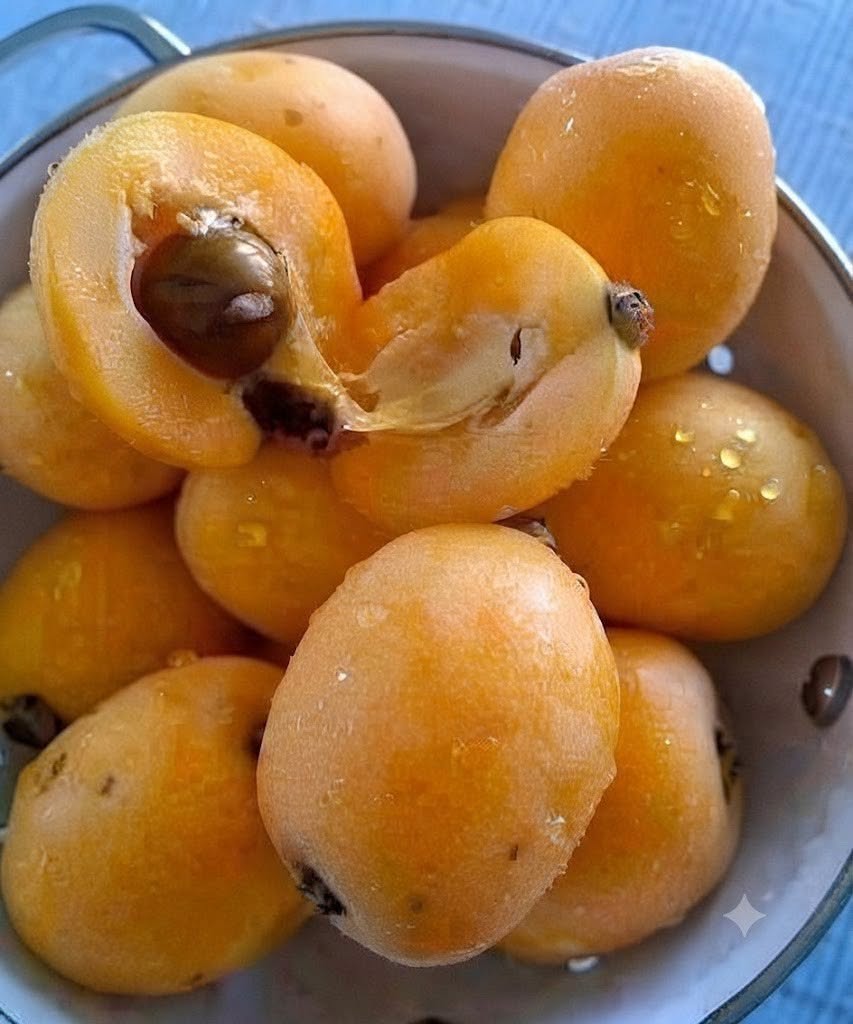
Once you cut a loquat open, the large glossy seeds make the difference particularly obvious.
Loquats originated in southeastern China and have been cultivated for centuries.
Today, they are grown in many warm and subtropical regions around the world.
They can be found in parts of:
China
Japan
India
Spain
Italy
Turkey
Greece
The Middle East
California
Other regions with suitable climates
The trees are evergreen and can produce fragrant flowers before developing clusters of fruit.
The loquat tree isn’t only valued for its fruit.
It is also appreciated as an ornamental tree because of its large, dark-green leaves.
The leaves can be quite striking, with a leathery texture and prominent veins.
In suitable climates, loquat trees can become attractive additions to gardens and landscapes while also producing edible fruit.
Fresh loquats are delicious on their own, but there are plenty of ways to use them.
Try them:
Combine sliced loquats with strawberries, oranges, grapes, or apples.
Add chopped loquat to plain Greek yogurt for a naturally sweet breakfast.
Remove the seeds first, then blend the flesh with yogurt, milk, or another fruit.
Their sweet-tart flavor can work surprisingly well with leafy greens, nuts, and a light dressing.
Fresh loquat can be served chilled with a little yogurt or another simple topping.
The important part is always the same:
Remove the seeds before eating or blending.
So, what fruit is this?
The fruit in the image appears to be a loquat, a small golden-orange fruit known for its juicy flesh, sweet-tart flavor, and unusually large brown seeds.
Loquats are related to apples, pears, peaches, and other members of the rose family. They provide useful nutrients including fiber, vitamin C, potassium, and carotenoid compounds, making them a nutritious addition to a varied diet.
They can be eaten fresh, added to salads and smoothies, or turned into jams and desserts.
But there is one detail you shouldn’t forget:
Enjoy the fruit, but remove and discard the seeds.
If you’ve never tasted a loquat before, its flavor may be a pleasant surprise. It sits somewhere between familiar stone fruits and citrusy sweetness, with a juicy texture that makes it particularly refreshing when ripe.
So the next time you see these little golden fruits at a market, you’ll know exactly what you’re looking at.
It’s a loquat—and it’s definitely a fruit worth getting to know.