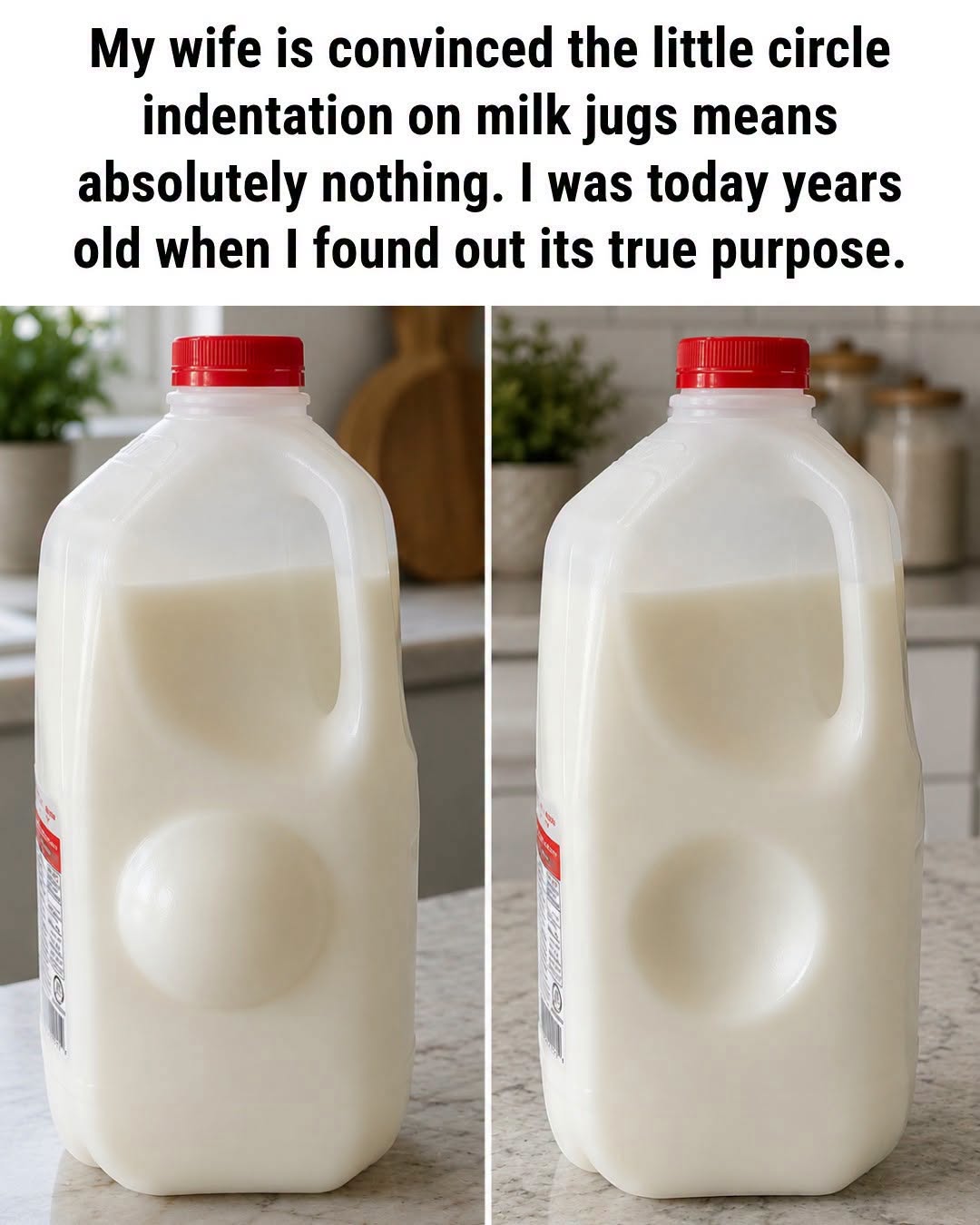
This same flexibility is useful when milk jugs are handled during shipping. Containers are packed closely together, stacked, moved along conveyor systems, placed into crates, and loaded onto delivery vehicles. Even careful handling can involve bumps, vibrations, or an occasional drop. A rigid container might transfer the full force of an impact directly through its sidewall. The circular indentation helps spread that force across a wider area and gives the wall a little room to flex.
That may seem like a minor advantage, but it can prevent leaks and large amounts of waste. A split jug can damage other products around it, create a difficult cleanup, and force a store or distributor to discard more than one item. A small structural feature that reduces the chance of failure therefore matters throughout the supply chain, not only in a customer’s kitchen.
The indentation also strengthens the jug without requiring manufacturers to make the entire container thicker. A completely flat sheet of plastic can bend easily, while a molded curve or recessed shape adds stiffness. The principle is similar to the way folds, arches, and ridges give strength to structures made from relatively thin material. By shaping the wall strategically, designers can make the container more stable while limiting the amount of plastic needed to produce it.