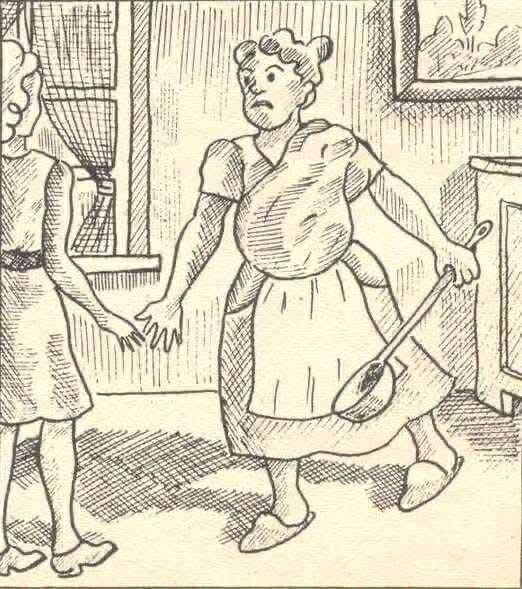
Before we take a closer look and find out exactly where the donkey was hiding all along, here’s a tip — turn the screen upside down.
The trick works because the drawing relies on orientation. When the picture is viewed normally, the lines look like part of an ordinary scene, so the brain tries to organize them according to that familiar viewpoint. Rotating the image changes which shapes seem important. Features that looked random begin to resemble the outline of a donkey’s head, ears, muzzle, and body. The animal was present from the beginning, but the original angle made those clues difficult to combine.
This kind of puzzle is a good example of how visual perception depends on context. The eyes collect contrast, edges, and color, while the brain decides what those signals probably represent. It uses previous experience to make a quick guess. Most of the time that shortcut is useful, but an optical illusion deliberately arranges details so the first guess is incomplete. Once the image is turned around, the brain receives a new set of relationships and can recognize the hidden figure much more easily.
If you want to solve similar hidden-image challenges, begin by looking at the entire picture instead of staring at one small area. Notice strong outlines, repeated curves, unusually dark patches, and shapes near the edges. If nothing appears, change your viewing distance, tilt your head, or rotate the screen. A short break can also help because returning with fresh attention sometimes weakens the first interpretation that kept the hidden figure out of sight.