
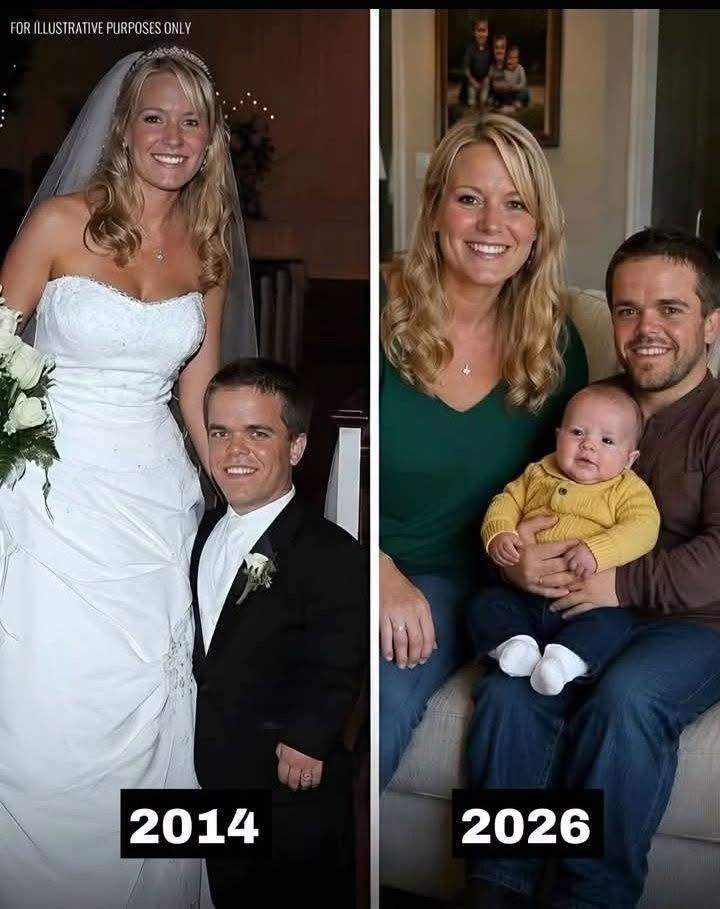
I’ll never forget my mother’s expression on my wedding day.
She wasn’t smiling. She wasn’t proud. She looked like she wanted to disappear entirely — the kind of discomfort where you can almost hear someone thinking, “Please let the ground open up and swallow me whole.”
And it was all because of the man I chose to marry: Jordan.
Jordan was born with achondroplasia, a form of dwarfism. And because of that, my parents never saw him as anything more than a punchline. I once overheard them call him a “genetic stain” on our family name — words that never really left me.
So when I walked down the aisle, I thought that would be the worst moment of the day.
I was wrong.
At the reception, my father grabbed the microphone, already laughing before he even spoke.
“To the couple! May their children be able to reach the dinner table!”
A few people laughed awkwardly. The rest shifted in silence.
My face burned. I wanted to vanish.
Jordan squeezed my hand under the table and leaned in quietly.
“Don’t let it get to you.”
“How can I not? That’s my father, and what he just said…”
“I know,” he said calmly. “But trust me, life is easier when you let ugly remarks go.”
That calmness frustrated me. Not because he was wrong — but because I could hear what he wasn’t saying.
I’m used to it.
It’s nothing new.
I’ve survived worse.
And that realization hurt more than my father’s “joke.”
Things only got worse from there.
Jordan had grown up in an orphanage after being abandoned by his biological parents. I used to think that detail would make people soften toward him — maybe even admire what he overcame.
My parents didn’t.
During one dinner, when he mentioned it, my mother gave a small, uncomfortable laugh.
“I’m sorry,” she said.
Then my father followed with a smirk.
“But I think we all know why your parents took you to the orphanage.”
I froze.
“Are you serious right now?” I snapped.
“It’s just a joke, Jen!” my father replied. “Jordan doesn’t mind, do you? A little guy like you must—”
“Stop. Just stop.”
My chest was shaking. If he had finished that sentence, I honestly think I would have flipped the table.
My mother muttered that I was being “too sensitive.”
That was the moment something inside me changed. I understood then: they would never accept him. To them, he would always be something to tolerate — or mock.
Over time, I pulled away from them.
Fewer calls. Fewer visits. Every interaction came with another insult disguised as humor, another subtle humiliation they pretended was harmless.
But Jordan never fought back. Not once.
He just kept building his life.
Quietly. Steadily.
And eventually, successfully.
For illustration purposes
Then everything collapsed.
My parents’ business failed. Debt piled up. Years of financial pride disappeared almost overnight.
I didn’t fully understand the scale of it until they showed up at our door.
They looked smaller than I had ever seen them. Tired. Nervous. Careful.
And suddenly… polite.
They didn’t come to apologize.
They came to ask for money.
“Jordan, I heard your firm has secured a major contract,” my mother said softly. “We were hoping you could help us. We’re family, after all.”
“We just need $20,000 to keep the bank from seizing our condo,” my father added.
I couldn’t believe it.
All those years of cruelty… and now they were standing in our home asking for help like nothing had happened.
I was about to tell them to leave.
But Jordan spoke first.
“Come in,” he said. “We’ll talk over tea.”
Screenshot
They sat in our living room for nearly two hours.
Talking. Explaining. Justifying.


