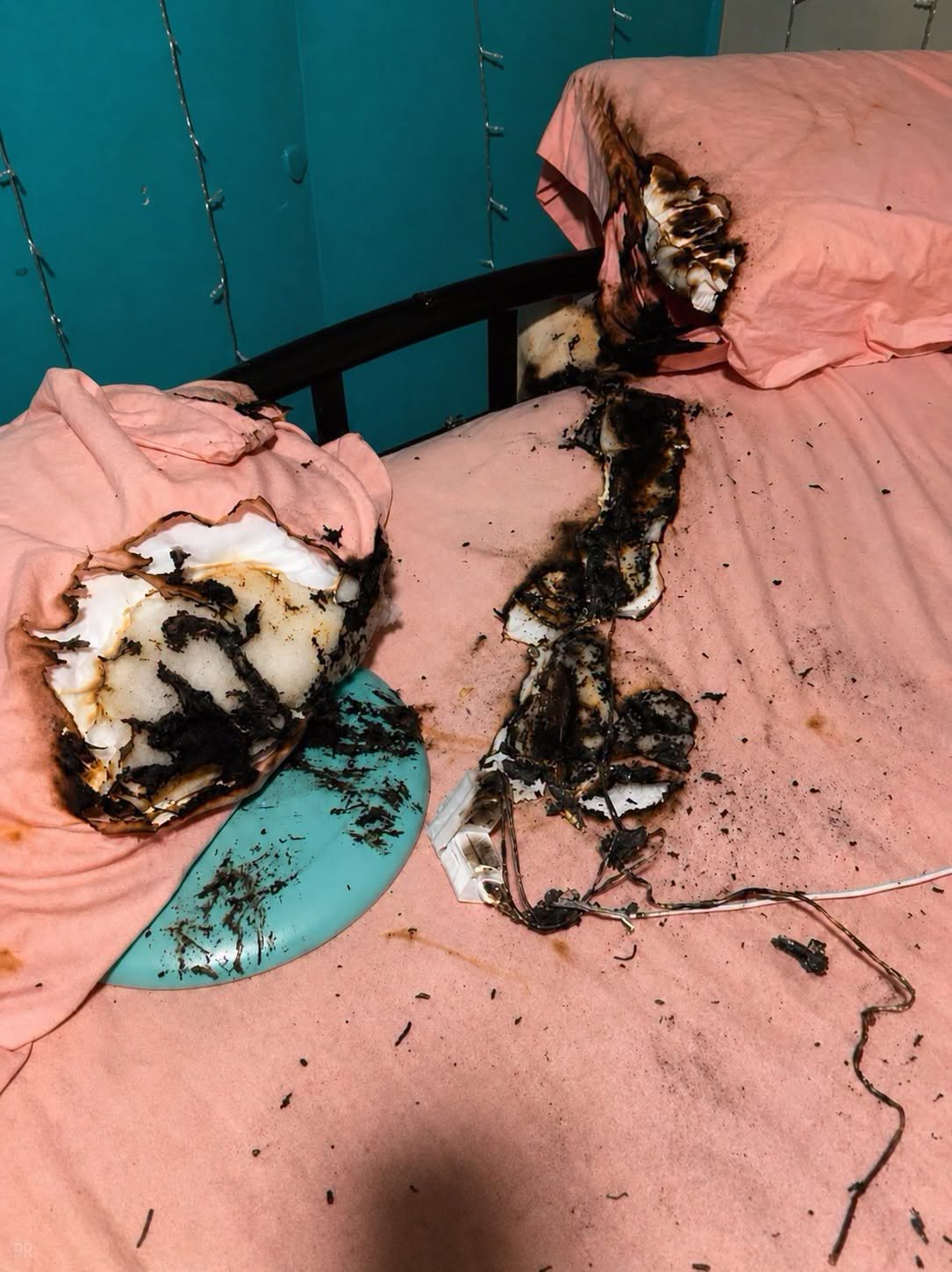
Charging a phone overnight is common, but where the device and charger are placed can determine whether an ordinary habit becomes a fire risk. Firefighters repeatedly warn against leaving a charging phone beneath a pillow, blanket, mattress, or pile of clothing. These soft materials trap heat and can also hide early warning signs such as a hot plug, damaged cable, smoke, or an unusual smell.
Phones and chargers naturally produce some heat while transferring energy. On a hard, open surface, that heat can dissipate. Beneath bedding, ventilation is reduced and temperature can rise. A properly designed device should manage normal heat, but damaged batteries, counterfeit accessories, loose electrical connections, and obstructed airflow increase the chance of failure.
Lithium-ion batteries store considerable energy in a small space. If a battery is crushed, punctured, overheated, poorly manufactured, or internally damaged, it can enter a process called thermal runaway. The cell heats rapidly and may ignite nearby combustible material. Such failures are uncommon, yet a bed is one of the worst places for one to occur because sheets, pillows, and mattresses burn and produce dangerous smoke.
The safest overnight location is a stable, hard, nonflammable surface with space around the phone and charger. A bedside table is better than a bed, sofa, or carpet. The device should not be covered, and the charging cable should not be pinched under furniture or stretched where it can fray.
Accessories deserve careful attention. Use the manufacturer’s charger or a reputable, correctly rated replacement that complies with applicable safety standards. Extremely cheap or unbranded adapters may lack protective components. A cable with exposed wire, bent connectors, scorch marks, or intermittent charging should be replaced rather than taped and reused.
Heat is an important warning sign. Slight warmth can be normal, but a phone or plug that becomes painfully hot, swells, crackles, smells chemical or burnt, or shows smoke should be disconnected only if it is safe to do so. Move away, alert others, and contact emergency services if fire or heavy smoke develops. Do not handle a swollen battery unnecessarily.
Smoke alarms provide essential protection because many charging incidents happen while people are asleep. Alarms should be installed on every level of a home, inside bedrooms where recommended, and outside sleeping areas, following local fire guidance. Test them regularly and replace batteries or units according to the manufacturer’s schedule.