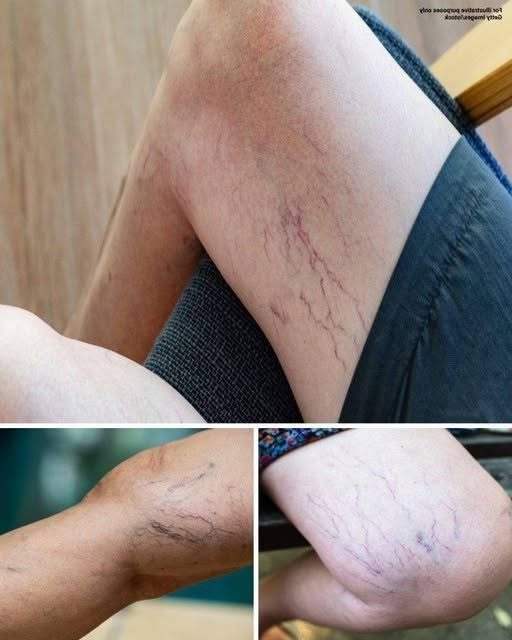
If You Have Purple Veins on Your Legs, Here’s What They May Mean
Subtitle: Purple or visible veins are often harmless, but in some cases they can signal an underlying circulation problem. Understanding the common causes and warning signs can help you know when it’s time to seek medical advice.
Have you ever noticed small purple, blue, or reddish veins spreading across your legs like tiny webs? Many people assume they’re simply a cosmetic issue, but visible veins can sometimes reveal important clues about your circulatory health.
While these veins are often harmless, they may also be an early sign of vein disease or poor circulation. Knowing what causes them—and when to pay attention—can help you protect your vascular health.
What Are Purple Veins?
Purple veins, often called spider veins (telangiectasias), are small blood vessels that become visible just beneath the skin’s surface.
They commonly appear on the:
- Thighs
- Calves
- Ankles
- Feet
Although usually painless, some people experience symptoms such as:
- Aching legs
- Burning sensations
- Mild swelling
- Heaviness after standing
- Itching around the veins
The Most Common Causes of Purple Veins
Several factors can contribute to their development.
1. Genetics
Family history is one of the strongest risk factors.
If your parents or close relatives have spider veins or varicose veins, you’re more likely to develop them as well. Inherited weakness in vein walls or valves can make blood pool more easily.