2. Prolonged Sitting or Standing
Remaining in one position for long periods slows the return of blood from your legs to your heart.
Common high-risk occupations include:
- Office workers
- Teachers
- Cashiers
- Nurses
- Hairdressers
- Factory workers
Moving regularly throughout the day helps improve circulation.
3. Excess Body Weight
Carrying extra weight places additional pressure on the veins in your legs.
Over time, this increased pressure may weaken the tiny valves inside the veins, making it harder for blood to flow efficiently.
4. Aging
As we grow older, vein walls naturally lose some of their elasticity.
The valves responsible for keeping blood moving upward may weaken, increasing the likelihood of visible veins.
5. Pregnancy
Pregnancy is another common cause because:
- Blood volume increases.
- Hormonal changes relax vein walls.
- The growing uterus places pressure on pelvic veins.
For many women, spider veins improve after childbirth, although some remain permanently.
6. Hormonal Changes
Hormones influence blood vessel elasticity.
Changes associated with:
- Pregnancy
- Menopause
- Birth control pills
- Hormone replacement therapy
may contribute to the appearance of visible veins.
Are Purple Veins Dangerous?
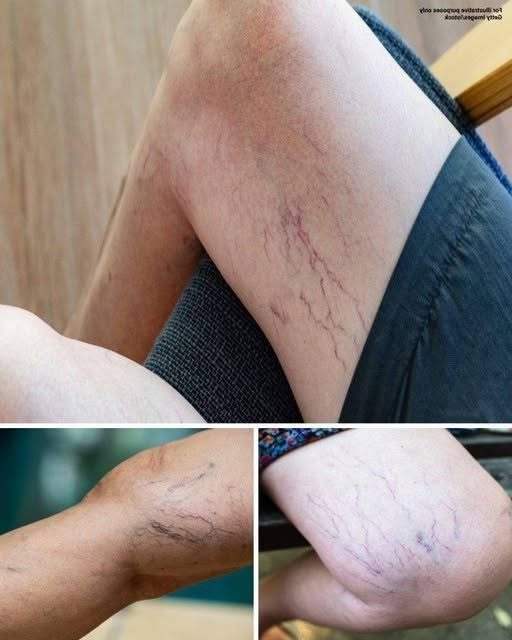
In many cases, spider veins are harmless and mainly affect appearance.
However, they can sometimes indicate chronic venous insufficiency, a condition in which leg veins have difficulty returning blood to the heart.
This condition may cause:
- Persistent swelling
- Leg pain
- Skin discoloration
- Varicose veins
- Skin ulcers in severe cases
When Should You See a Doctor?
Medical evaluation is recommended if purple veins are accompanied by:
- Significant leg swelling
- Persistent pain
- Warmth or redness
- Skin ulcers
- Bleeding veins
- Sudden swelling in one leg
- Shortness of breath or chest pain (seek emergency care immediately)
These symptoms may indicate more serious circulatory conditions requiring prompt treatment.
Tips to Support Healthy Circulation
Simple lifestyle habits can help reduce discomfort and lower the risk of worsening vein problems.
Try to:
- Walk regularly.
- Avoid sitting or standing for long periods.
- Elevate your legs when resting.
- Maintain a healthy weight.
- Stay physically active.
- Wear compression stockings if recommended by your healthcare provider.
- Avoid tight clothing that restricts circulation.
- Stay well hydrated.
Can Purple Veins Be Treated?
Yes. Treatment depends on the severity of the condition and your symptoms.
Options may include:
- Compression therapy
- Lifestyle modifications
- Sclerotherapy
- Laser treatment
- Medical procedures for larger varicose veins
A healthcare professional can determine which approach is most appropriate.
Frequently Asked Questions
Are spider veins the same as varicose veins?
No. Spider veins are smaller and usually lie close to the skin’s surface, while varicose veins are larger, swollen, and often bulge outward.
Can exercise help?
Yes. Activities like walking, swimming, and cycling improve circulation and strengthen the calf muscles that help pump blood back to the heart.
Do spider veins always require treatment?
Not necessarily. Many people choose treatment for cosmetic reasons, while others seek medical care if symptoms develop.
Can they disappear on their own?
Some veins may fade over time, particularly after pregnancy, but many remain unless treated.
Are purple veins always caused by poor circulation?
No. Genetics, aging, hormonal changes, and prolonged standing can also contribute. However, persistent symptoms should be evaluated by a healthcare professional.
Final Thoughts
Purple veins on the legs are extremely common, especially with age or a family history of vein problems. In many cases, they are harmless, but they can sometimes be an early warning sign of underlying circulation issues.
Pay attention to symptoms such as pain, swelling, or skin changes, and don’t hesitate to seek medical advice if you have concerns. Early evaluation and healthy lifestyle habits can go a long way toward keeping your legs healthy and your circulation strong.